
🛢️

Water Tanks and Cylinders Specialists Across the UK

Repairing, replacing and re-plumbing cold water storage tanks in the loft and hot water cylinders in the airing cupboard, including vented, unvented and thermal store cylinders.

💰 Typical cost: £450–£2,800⏱ Timeframe: Half a day–2 days📋 Free surveys available
Job profileCost 5 of 5, Complexity 4 of 5, Duration 5 of 5, Dustiness 2 of 5, Disturbance 4 of 5Cost: 5 of 5Complexity: 4 of 5Duration: 5 of 5Dustiness: 2 of 5Disturbance: 4 of 5Cost5/5Complexity4/5Duration5/5Dustiness2/5Disturbance4/5
What the job involves, at a glance

What is involved in water tank and cylinder work?

Cold water storage tanks feed parts of a gravity system, while hot water cylinders store heated water for taps and showers. The work can be a leaking connection repaired, a loft cistern replaced or a new vented, unvented or thermal store cylinder fitted. The plumber first needs to know which system is in place before choosing a replacement.
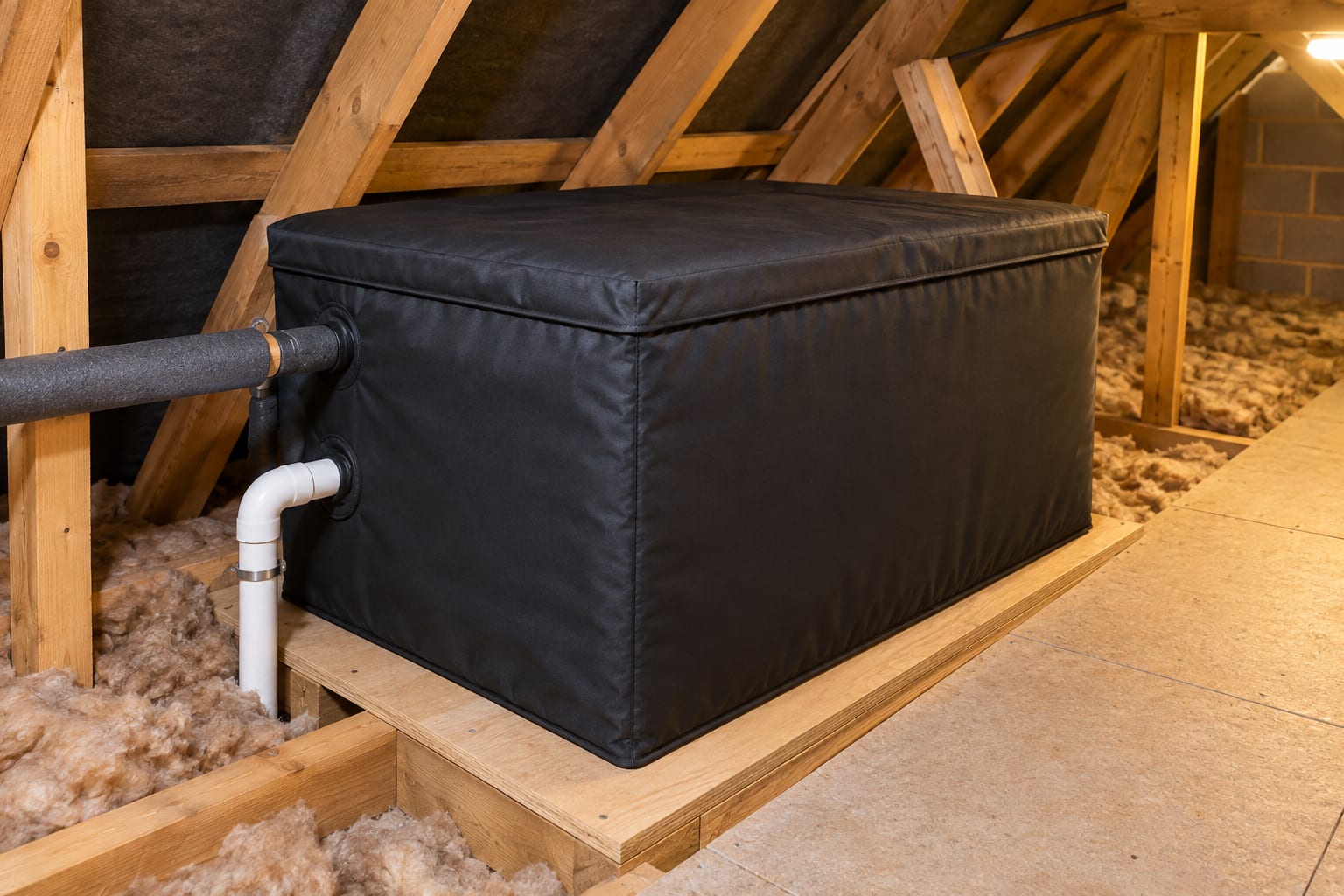
Lidded cold water storage tank with insulation on a supported platform in a loft

Signs you need water tank and cylinder work

  • Dampness around the cylinder base, seams or connections
  • A cracked cold water cistern, damaged lid or persistent overflow
  • Hot water that runs out sooner than it used to
  • A visible discharge from an unvented cylinder’s safety pipe
  • Poor access, missing insulation or ageing fittings found during another repair

Vented, unvented or a thermal store?

A vented cylinder normally relies on a loft cistern. An unvented cylinder uses the mains supply, so available pressure and flow must be checked; changing the cylinder alone cannot cure a poor incoming supply. A thermal store works differently again and must suit the heat source and hot water arrangement. Ask for the proposed type and capacity in writing.

A leak at a replaceable valve or connection may be repairable without changing a sound vessel. A leaking shell needs a different assessment. Age alone is not a reason to replace everything. If an old tank might contain asbestos, leave it undisturbed and arrange assessment by someone competent in asbestos work; appearance cannot confirm the material.

What the contractor checks and repairs

  1. Identify the vessel type, capacity, heat source and condition of nearby fittings.
  2. Check loft hatch or cupboard clearance, support and the route for removing the old vessel.
  3. Isolate the relevant water and heat supplies, drain as needed and protect the floors.
  4. Repair a sound connection or fit the agreed vessel, valves, insulation and compatible controls.
  5. Refill, check for leaks, test the controls and explain servicing and any commissioning paperwork.

How much should you budget for water tank and cylinder work?

Our indicative UK range for water tank and cylinder work is £450–£2,800. This is a budgeting guide for ordinary work, not a fixed quotation. Vessel type and capacity, loft access, cupboard clearance, disposal, controls and changes to the discharge pipe route affect the total. Larger unvented installations, thermal stores and system conversions can exceed the guide range.

The site’s guide time is half a day–2 days. Fault finding, unavailable parts or a second trade can extend the visit. Confirm labour, materials, call-out charges and whether VAT is included before booking.

What to put in the enquiry

Photograph the cylinder label from a safe position and describe the cupboard or loft access. Do not enter an unboarded loft or cut an old tank to measure it. Tell the plumber whether a boiler, immersion heater or another heat source supplies the hot water.

Check the scope of the quote

Specify the vessel make, model and capacity, the valves and controls included, removal of the old unit, electrical work, commissioning and any notification. Agree separately who repairs cupboards, ceilings or other finishes.

Safety and relevant requirements

Unvented hot water work needs someone competent in that system’s safety controls and discharge arrangements. Approved Document G for England explains the English requirements; Wales, Scotland and Northern Ireland have their own building rules. Ask the installer which notification route applies. Never cap a vent, overflow or safety discharge.

Compare quotes for water tank and cylinder work

GetPlumbingQuotes.co.uk can pass one enquiry to up to four independent plumbers, depending on the work and local availability. Businesses joining the network are asked for relevant insurance details and references. Check current documents and experience yourself before appointing anyone.

The matching service is free and there is no obligation to book. The chosen contractor provides the advice and carries out the work under an agreement with you. Describe the job and request quotes.

Frequently asked questions

Can a leaking cylinder be repaired?

A leaking valve or connection on a sound cylinder may be repairable. Leakage from the vessel itself needs inspection and may mean replacement. Ask the plumber to identify the source before agreeing to a new cylinder.

Will an unvented cylinder improve every shower?

Not necessarily. Its performance depends on the incoming mains pressure and flow, pipework and demand from other outlets. The installer should check these before recommending a conversion.

What paperwork should I receive?

Ask for the invoice, product details, commissioning information and any building control or scheme certificate required for the work. Notification arrangements depend on the job and the UK nation.

Find Water Tanks and Cylinders Specialists by County

Select your county to browse local water tank and cylinder work contractors and request free quotes.

Aberdeen City
Scotland
5 towns covered
Aberdeenshire
Scotland
10 towns covered
Anglesey
Wales
7 towns covered
Angus
Scotland
6 towns covered
Argyll and Bute
Scotland
6 towns covered
Bedfordshire
East of England
15 towns covered
Berkshire
South East England
15 towns covered
Blaenau Gwent
Wales
6 towns covered
Bridgend
Wales
6 towns covered
Bristol
South West England
12 towns covered
Buckinghamshire
South East England
15 towns covered
Caerphilly
Wales
7 towns covered
Cambridgeshire
East of England
15 towns covered
Cardiff
Wales
7 towns covered
Carmarthenshire
Wales
7 towns covered
Ceredigion
Wales
6 towns covered
Cheshire
North West England
16 towns covered
City of Edinburgh
Scotland
6 towns covered
Clackmannanshire
Scotland
5 towns covered
Conwy
Wales
6 towns covered
Cornwall
South West England
20 towns covered
County Antrim
Northern Ireland
10 towns covered
County Armagh
Northern Ireland
7 towns covered
County Down
Northern Ireland
10 towns covered
County Durham
North East England
15 towns covered
County Fermanagh
Northern Ireland
5 towns covered
County Londonderry
Northern Ireland
7 towns covered
County Tyrone
Northern Ireland
7 towns covered
Cumbria
North West England
15 towns covered
Denbighshire
Wales
6 towns covered
Derbyshire
East Midlands
15 towns covered
Devon
South West England
20 towns covered
Dorset
South West England
15 towns covered
Dumfries and Galloway
Scotland
7 towns covered
Dundee City
Scotland
4 towns covered
East Ayrshire
Scotland
6 towns covered
East Dunbartonshire
Scotland
5 towns covered
East Lothian
Scotland
6 towns covered
East Renfrewshire
Scotland
5 towns covered
East Riding of Yorkshire
Yorkshire and the Humber
14 towns covered
East Sussex
South East England
15 towns covered
Essex
East of England
20 towns covered
Falkirk
Scotland
6 towns covered
Fife
Scotland
10 towns covered
Flintshire
Wales
6 towns covered
Glasgow City
Scotland
7 towns covered
Gloucestershire
South West England
15 towns covered
Greater London
London
30 towns covered
Greater Manchester
North West England
20 towns covered
Gwynedd
Wales
7 towns covered
Hampshire
South East England
20 towns covered
Herefordshire
West Midlands
10 towns covered
Hertfordshire
East of England
16 towns covered
Highland
Scotland
10 towns covered
Inverclyde
Scotland
5 towns covered
Isle of Wight
South East England
10 towns covered
Kent
South East England
20 towns covered
Lancashire
North West England
20 towns covered
Leicestershire
East Midlands
15 towns covered
Lincolnshire
East Midlands
18 towns covered
Merseyside
North West England
14 towns covered
Merthyr Tydfil
Wales
5 towns covered
Midlothian
Scotland
5 towns covered
Monmouthshire
Wales
6 towns covered
Moray
Scotland
6 towns covered
Na h-Eileanan Siar
Scotland
5 towns covered
Neath Port Talbot
Wales
6 towns covered
Newport
Wales
6 towns covered
Norfolk
East of England
16 towns covered
North Ayrshire
Scotland
6 towns covered
North Lanarkshire
Scotland
7 towns covered
North Yorkshire
Yorkshire and the Humber
18 towns covered
Northamptonshire
East Midlands
15 towns covered
Northumberland
North East England
15 towns covered
Nottinghamshire
East Midlands
15 towns covered
Orkney Islands
Scotland
4 towns covered
Oxfordshire
South East England
15 towns covered
Pembrokeshire
Wales
7 towns covered
Perth and Kinross
Scotland
7 towns covered
Powys
Wales
8 towns covered
Renfrewshire
Scotland
6 towns covered
Rhondda Cynon Taf
Wales
7 towns covered
Rutland
East Midlands
10 towns covered
Scottish Borders
Scotland
7 towns covered
Shetland Islands
Scotland
4 towns covered
Shropshire
West Midlands
15 towns covered
Somerset
South West England
18 towns covered
South Ayrshire
Scotland
5 towns covered
South Lanarkshire
Scotland
8 towns covered
South Yorkshire
Yorkshire and the Humber
14 towns covered
Staffordshire
West Midlands
15 towns covered
Stirling
Scotland
5 towns covered
Suffolk
East of England
15 towns covered
Surrey
South East England
20 towns covered
Swansea
Wales
6 towns covered
Torfaen
Wales
5 towns covered
Tyne and Wear
North East England
13 towns covered
Vale of Glamorgan
Wales
6 towns covered
Warwickshire
West Midlands
13 towns covered
West Dunbartonshire
Scotland
4 towns covered
West Lothian
Scotland
6 towns covered
West Midlands
West Midlands
18 towns covered
West Sussex
South East England
15 towns covered
West Yorkshire
Yorkshire and the Humber
18 towns covered
Wiltshire
South West England
15 towns covered
Worcestershire
West Midlands
13 towns covered
Wrexham
Wales
6 towns covered
Advertisement